
About Scorup
At scorup.com, we help businesses implement modern analytics solutions that improve data accuracy, marketing performance, and privacy compliance. Whether you need Google Analytics 4, Google Tag Manager, Meta Conversions API, or complete server-side tracking implementation, our team delivers scalable solutions tailored to your business goals.
In today’s privacy-focused digital landscape, businesses are facing significant challenges in collecting accurate marketing and website data. Browser restrictions, ad blockers, cookie limitations, and changing privacy regulations have reduced the reliability of traditional client-side tracking. As a result, organizations are looking for more secure and dependable ways to measure user behaviour and campaign performance.
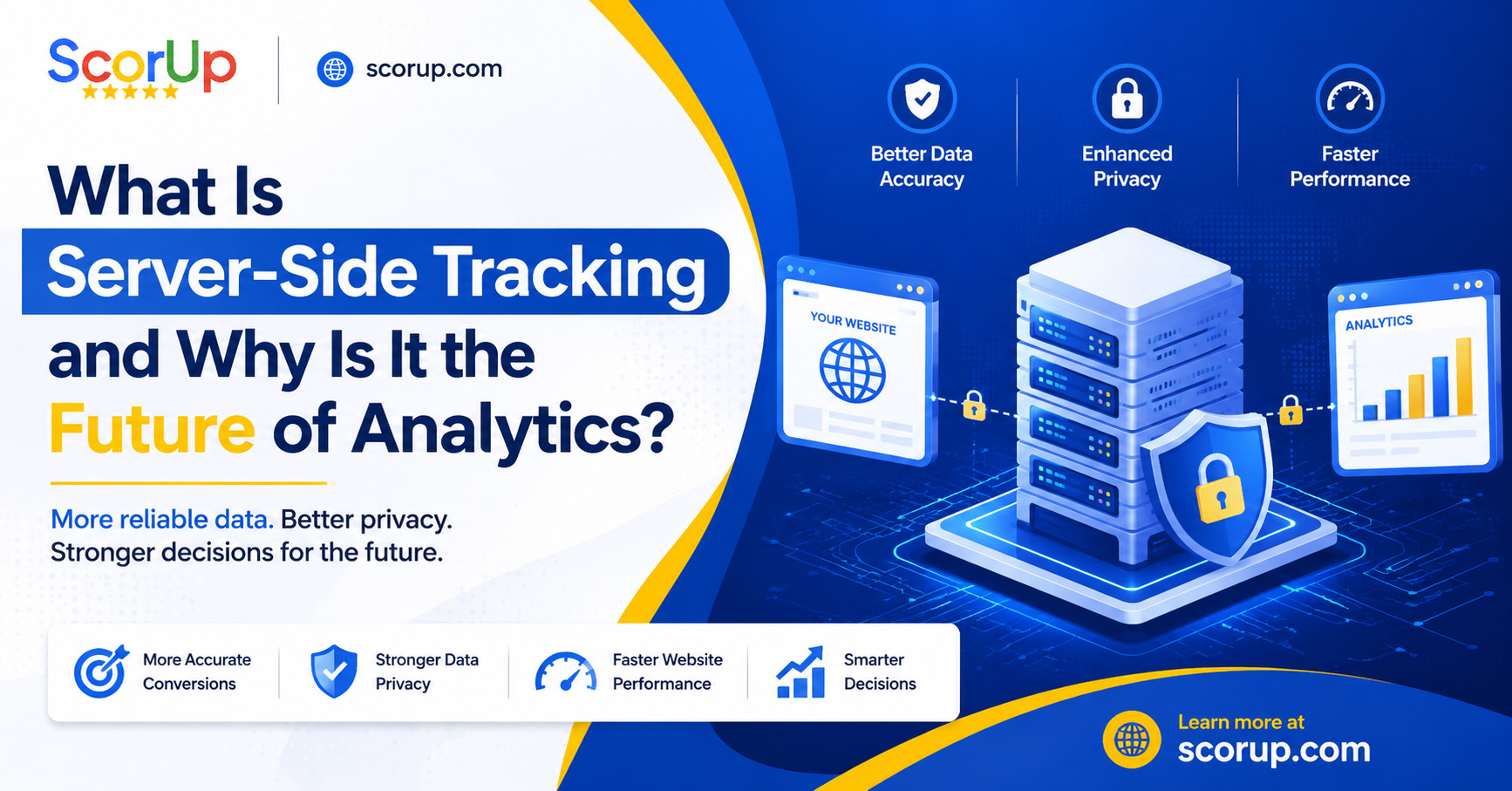
Server Side Tracking has emerged as one of the most effective solutions for modern analytics. Instead of relying entirely on a visitor’s browser to send data to analytics and advertising platforms, server-side implementations process data through a secure server before forwarding it to the intended destinations. This approach improves data accuracy, enhances website performance, strengthens privacy compliance, and provides businesses with greater control over their analytics infrastructure.
Whether you manage an e-commerce store, SaaS platform, corporate website, or digital marketing campaign, understanding server-side tracking is becoming essential for making informed decisions. As marketing technologies continue to evolve, companies that adopt modern tracking methods are better equipped to optimize advertising spend, improve reporting accuracy, and build long-term customer trust. This guide explains how server-side tracking works, its advantages, implementation process, best practices, and why it represents the future of digital analytics.
Understanding How Server-Side Tracking Works
Unlike traditional browser-based tracking, server-side tracking changes the way information is collected and transmitted.
With client-side tracking, a visitor’s browser sends data directly to services like Google Analytics, Meta Ads, or other marketing platforms. Every script runs inside the browser, making it vulnerable to browser restrictions, ad blockers, and privacy settings.
With Server Side Tracking, data first travels to a secure server controlled by your business or cloud infrastructure. The server validates, filters, enriches, and forwards the information to analytics and advertising platforms.
This architecture creates several important advantages:
- Improved data reliability
- Better security
- Enhanced privacy controls
- Greater flexibility
- Cleaner event processing
Because the server becomes the central hub for data collection, businesses gain much better visibility into their digital ecosystem.
Why Traditional Client-Side Tracking Is Becoming Less Reliable
Over the past few years, digital analytics has changed a lot.
The effectiveness of browser-based tracking has gone down because of several factors:
- Restrictions on third-party cookies
- Intelligent Tracking Prevention (ITP)
- Ad blockers
- Browser privacy updates
- Consent requirements
- New privacy laws
These changes often lead to:
- Missing conversions
- Inaccurate tracking of user behaviour
- Poor campaign optimization
- Broken customer journeys
- Inconsistent reports
Companies relying only on client-side tracking often find that data from advertising platforms doesn’t match their internal sales records.
Key Benefits of Server-Side Tracking
Organizations adopting modern analytics infrastructures enjoy numerous benefits.
Improved Data Accuracy
Since data is processed on a dedicated server, businesses lose fewer events caused by browser limitations or tracking prevention technologies.
Better Website Performance
Removing multiple tracking scripts from the browser can reduce page weight and improve loading speed, creating a smoother user experience.
Stronger Privacy Compliance
Companies can decide exactly what information is transmitted to each third-party platform while respecting user consent and applicable privacy laws.
Enhanced Security
Sensitive business logic remains on the server rather than being exposed in the browser.
More Reliable Marketing Attribution
Server Side Tracking helps advertising platforms receive cleaner conversion data, allowing optimization algorithms to perform more effectively.
Business Applications Across Industries
Many different industries are already seeing the benefits of server-side tracking.
E-commerce
Online stores can get better insights into purchases, product performance, checkout behaviour, and advertising effectiveness.
SaaS Companies
Software businesses can track subscriptions, feature usage, customer interactions, and user lifecycle.
Lead Generation
Businesses that collect leads through forms can accurately measure inquiries, calls, bookings, and consultations.
Enterprise Organizations
Large companies often need centralized control over multiple websites, apps, and regional analytics setups.
How Server-Side Tracking Improves Marketing Performance
Digital advertising platforms depend on quality data.
When conversion events become incomplete or inaccurate, optimization algorithms struggle to identify valuable users.
By implementing Server Side Tracking, marketers can:
- Improve conversion reporting
- Strengthen audience building
- Increase attribution accuracy
- Enhance remarketing effectiveness
- Optimize advertising budgets
- Reduce reporting discrepancies
Accurate event collection enables marketing teams to make data-driven decisions with greater confidence.
Privacy and Regulatory Advantages
Privacy is now a top priority for both businesses and users.
Laws like GDPR and CCPA require companies to handle customer data responsibly.
A server-based setup allows companies to:
- Remove unnecessary data
- Filter out personal information
- Follow consent rules
- Control sharing of data
- Keep detailed logs of data processing
This added control helps with better compliance and protects customer trust.
Common Tools Used for Server-Side Tracking
Several tools help with server-side tracking:
- Google Tag Manager Server Container
- Google Cloud Platform
- Stapes
- AWS
- Microsoft Azure
- First-party APIs
- Meta Conversions API
- Google Analytics 4
- Google Ads Enhanced Conversions
The best choice depends on the size of the company, technical knowledge, budget, and reporting needs.
Best Practices for Successful Implementation
A successful setup needs careful planning.
Recommended practices include:
- Set clear business goals
- Identify which events and conversions are most important
- Ensure high-quality data by checking events before sending them
- Follow privacy rules and get user consent
- Keep an eye on performance by checking event quality, server logs, and reports
- Secure your system with authentication, encryption, and access controls
These steps help ensure long-term reliability of analytics.
Challenges Businesses Should Consider
Although server-side tracking is great, there are some challenges to keep in mind.
Some things to consider include:
- Complexity in setting up
- Costs of cloud hosting
- Need for technical knowledge
- Ongoing maintenance
- Monitoring infrastructure
Despite these factors, the long-term benefits usually make the effort worthwhile.
Why Server-Side Tracking Represents the Future of Analytics
Digital analytics is moving toward greater privacy, better accuracy, and stronger data ownership.
Browsers continue limiting traditional tracking methods, while customers increasingly expect responsible data handling.
This shift makes Server Side Tracking one of the most important investments businesses can make for future-ready measurement.
Organizations adopting modern tracking architectures benefit from:
- More accurate reporting
- Better campaign optimization
- Increased customer trust
- Improved data governance
- Greater flexibility for future integrations
As analytics continues evolving, businesses that embrace server-side infrastructure will be better positioned to make informed decisions and maintain a competitive advantage.
Conclusion
Modern businesses can no longer rely solely on browser-based tracking to understand customer behaviour and marketing performance. Privacy regulations, browser restrictions, and changing technologies demand a more reliable approach to analytics.
Implementing Server Side Tracking provides greater control over data collection, improves reporting accuracy, strengthens privacy compliance, and supports better advertising optimization. Although deployment requires planning and technical expertise, the long-term benefits far outweigh the initial investment.
For organizations seeking dependable analytics, scalable marketing measurement, and future-proof digital infrastructure, Server Side Tracking is becoming the preferred standard. As the digital ecosystem continues to evolve, businesses that adopt server-side strategies today will be better prepared for tomorrow’s analytics challenges.